

When people hear vehicle tracking, they usually think of one thing: knowing where a van, truck or company car is.
And yes, that matters… but if that is all you are getting from your vehicle tracking system, you are missing most of the value.
The right vehicle tracking solution should do more than put dots on a map. It should help different parts of your business make better decisions, respond faster, reduce unnecessary costs and stay connected to what is happening across the fleet.
Because fleet information is not just useful to the fleet manager.
It matters to:
And anyone else whose working day depends on knowing where vehicles are, how they are being used and what needs to happen next.
At TritonTrak, we do not believe in tracking for tracking’s sake. We start by understanding how your business works, who needs what information and where greater visibility could make a real difference.
Because the best vehicle tracking system is not necessarily the one with the longest feature list.
It is the one that works for your business.
A commercial fleet touches almost every part of a business.
Vehicles get people to jobs. They carry equipment. They make deliveries. They collect machinery. They respond to customer callouts. They generate fuel costs, maintenance costs, insurance costs and payroll costs.
So why should the information about those vehicles sit with one person or one department?
Connected fleet information gives the right people access to the right information when they need it.
That does not mean everybody needs to see everything. Quite the opposite.
A finance director might care about out-of-hours mileage and overtime. An operations manager may need live vehicle locations and site arrival times. A fleet manager needs servicing information. Customer service teams want to know when someone is likely to arrive.
The value comes from making fleet information useful to the people who can act on it.
Here is what that can look like across a business.

Fleet managers are usually the most obvious users of vehicle tracking software, but even here, there is a big difference between simply monitoring vehicles and actively managing a fleet. A connected system can help fleet teams understand how vehicles are being used across the business.
That information gives fleet managers something far more valuable than location alone: context.
Instead of finding problems after they have already cost the business money, teams can identify patterns earlier and make more informed decisions.
A vehicle tracking system can also automate much of the information that would otherwise need to be manually checked, recorded or chased.
That means less time buried in spreadsheets and more time actually managing the fleet.
And as a fleet grows, that becomes even more important.
What works when you have 10 vehicles rarely works when you have 50, 100 or several hundred.
Your tracking system should grow with you.

Operations teams spend enough time keeping everything moving without having to constantly ask:
Those questions might sound small, but across a busy week they create a surprising amount of admin.
With real-time fleet tracking, operations teams can see what is happening without picking up the phone. That makes it easier to allocate jobs, respond to unexpected changes and make better use of the vehicles already on the road.
If an urgent call-out comes in, the closest appropriate vehicle can be identified quickly.
If a job overruns, the next customer can be updated.
If a delivery vehicle is delayed, the team knows before the customer has to ask.
This is where vehicle tracking starts to become operational infrastructure rather than a standalone fleet tool. It gives people information they can actually use and that keeps the whole day moving.

Fleet costs are not always easy to spot. Some are obvious: fuel, servicing, leasing, insurance. Others quietly build up in the background.
Individually, these might not look significant. Across an entire fleet over 12 months, they can become expensive.
Good vehicle tracking gives finance teams better evidence.
That does not mean vehicle tracking should be used to obsess over every mile. It means businesses can make decisions based on what is actually happening rather than assumptions.
For finance teams, that means better visibility of where fleet money is going and where efficiencies could be made.

Directors and business owners do not need another dashboard full of numbers. They need useful information.
This is where connected fleet information becomes strategic.
A good fleet management system can help senior teams understand whether the fleet is supporting the business effectively or quietly creating unnecessary cost and risk. That becomes particularly important for companies operating across multiple regions, depots or divisions.
Without a connected view, different parts of a business can easily start working in isolation.
One depot has spare vehicles while another hires additional capacity. One division has efficient routes while another racks up unnecessary mileage. One team has a strong process for out-of-hours use while another has none.
Connected vehicle tracking helps bring those separate operations into one picture. You can still give individual teams the information relevant to them, while management maintains oversight of the wider fleet.
That is a much better foundation for decision-making.

Customers do not care about your vehicle tracking technology. They care about whether somebody turns up when you say they will. And when things change, they want to know.
That is why vehicle tracking can have a direct impact on customer service.
Imagine a customer calling to ask when an engineer will arrive. Without live fleet visibility, someone might need to call the engineer, wait for an answer, work out their location and then call the customer back. With connected vehicle data, the team can get a clearer picture immediately. That means more accurate updates and fewer frustrating “we’ll find out and get back to you” conversations.
It can also help businesses improve the way they schedule deliveries, collections, callouts and appointments. Over time, that visibility can expose recurring operational issues.
Vehicle tracking cannot solve every service problem. But it can give teams the information needed to solve them faster.
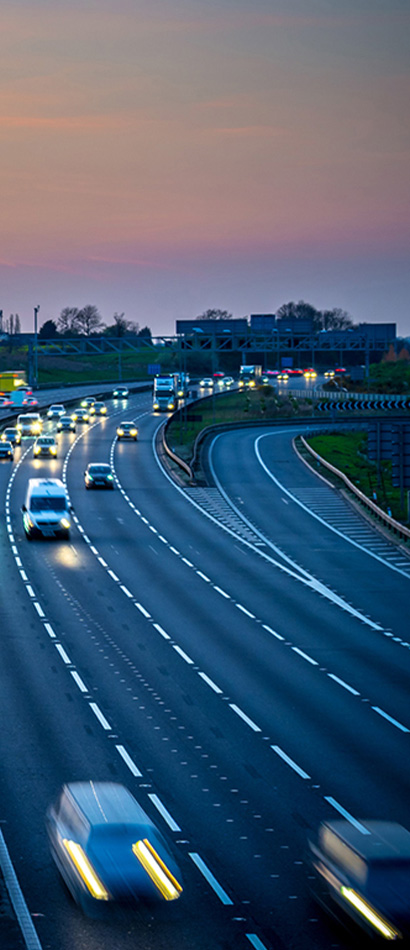
Vehicle tracking is sometimes talked about as though drivers automatically benefit the least. That does not have to be the case.
Implemented properly, GPS vehicle tracking can remove a lot of unnecessary interruption from a driver’s day.
If the office can already see that a driver is on the motorway heading towards a job, they do not need to call and ask where they are.
If site arrival and departure times are recorded automatically, drivers do not need to repeatedly report them manually.
If journey information is available when there is a dispute over working times, there is an objective record rather than somebody relying on memory.
Good tracking can also support fairer and more consistent policies. Everyone understands when company vehicles can be used, what is expected and how information will be used. That is very different from installing trackers and leaving employees guessing.
This is why implementation matters.
Tracking technology should be part of a clear working process, not something simply bolted onto a vehicle.

A surprising amount of fleet administration comes down to people manually finding information that already exists somewhere. For example:
If somebody has to repeatedly log into a platform, export data, tidy up a spreadsheet and email it around the business, the system is not really saving them much time.
Automated reporting can make a big difference. Information can be scheduled and sent directly to the right department:
The goal is not more reports. It is fewer people spending their day hunting for information. Not everybody needs the same vehicle tracking setup.
We usually hear people start with questions like: Which tracker? Which dashboard? Which product?
We think the better starting point is the business.
Those answers should shape the solution.
We have worked with businesses where multiple divisions operate completely differently. One team may need detailed live fleet visibility. Another might only need automated reporting. Senior management may want an overview across the whole operation without giving every employee access to everything.
That is why flexibility matters.
Your tracking system should fit your operation, not force your operation to fit the system. Vehicle tracking becomes more valuable when it connects with the rest of your assets.
Vehicles are often only one part of the picture. Many organisations also operate plant machinery, trailers, generators, welfare units, equipment or other valuable assets. If those sit across completely separate systems, you create more work.
For businesses managing both vehicles and equipment, connecting vehicle tracking, plant tracking and asset tracking can create a much clearer picture of what is happening across the operation.
This is where “tracking” starts to mean something bigger. It becomes a way of staying connected to the whole operation.
The question is not “Where are my vehicles?” That is useful. But it is only the beginning.
At TritonTrak, we work with businesses to understand those questions before recommending the technology. Because we are not interested in selling you a box, handing over a login and leaving you to work the rest out.
We look at your fleet, your people and your operation, then build a tracking solution around what you actually need.
That might mean vehicle tracking. It might mean automated reporting. It might mean plant tracking, battery-powered asset tracking, cameras or additional security.
Often, it is a combination.
The important part is that everything has a purpose and the right people have the right information at the right time.
A business that knows what is happening, wherever the working day takes it.
That is what staying connected should look like.
Let’s build a system that works for you.

Consec tetur adipiscing elit. Pellent esque cursus imperdiet fermentum. Maec enas id placerat mauris.

Consec tetur adipiscing elit. Pellent esque cursus imperdiet fermentum. Maec enas id placerat mauris.

Consec tetur adipiscing elit. Pellent esque cursus imperdiet fermentum. Maec enas id placerat mauris.